Year 9 Main Lesson: First World War
By Elias Milton Languages and Humanities Teacher, Class 7 Guardian
Year 9 Main Lesson: First World War
During the final three weeks of last term, Class 9B undertook their First World War Main Lesson. Throughout the Main Lesson, students followed the experiences of Australians during the war, while considering some of the larger questions that emerge when we look beyond dates, battles and famous individuals.
We began by exploring the world of 1914 and the circumstances that led to the outbreak of war. Students then considered what it meant for Australians to enlist, checking whether they would have met the requirements (other than age of course!) to join the Australian Imperial Force in 1914. From there, we followed the journey of Australian servicemen and women through the different theatres of the war. We looked at various battles and key places from German New Guinea, Egypt, Gallipoli, the Western Front and the Sinai Palestine Campaigns.
An important part of a Main Lesson is finding opportunities for students not only to think about what they are learning, but to feel and experience it through doing. In Humanities, it can sometimes be easy for the willing (the hands) to be overlooked. History can quickly become something that exists only in books, dates and notes on a board. Throughout this Main Lesson, we therefore looked for opportunities to bring history out of the page.
One particularly memorable experience saw the classroom transformed into a network of makeshift trenches. Using desks and the classroom space, students experienced a mock trench battle and, when the moment came, had to make the decision to “go over the top”. This experience gave students a small but memorable sense of the uncertainty, vulnerability and fear involved in leaving the relative safety of a trench. These experiences give students something tangible to return to when we discuss the decisions made by individuals in circumstances very different from their own and tend to stick with students for much longer than the notes they take.

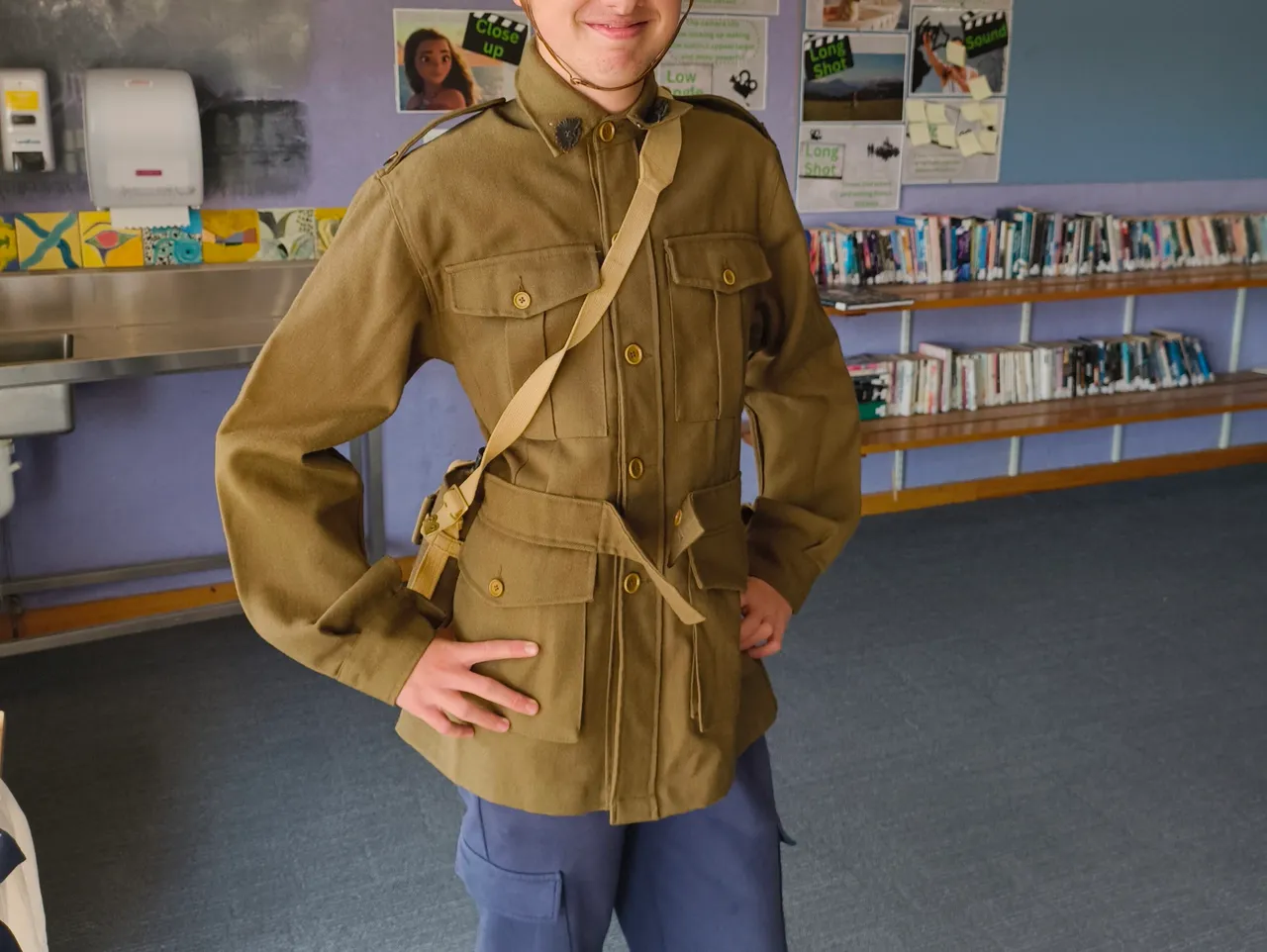
We were also very fortunate to borrow a collection of replica and reproduction materials from the Australian War Memorial. Students were able to handle and examine uniforms, medals, pamphlets and other objects connected to the period, as well as try on replica uniforms. Being able to feel the weight of a uniform, closely examine a medal or hold a pamphlet transforms an historical source from something viewed on a screen into something physical and immediate.
Perhaps one of the most meaningful outcomes of the Main Lesson has been the connections students have begun making with their own family histories. During the Main Lesson, and particularly in the days and weeks afterwards, a number of students have come forward to share stories about family members who served or were otherwise affected by the war. For some, events we had explored together suddenly had a name, a face or a family story attached to them. These personal connections help history move beyond something that happened to other people a long time ago. When students can find their own connection to the stories of the past, the learning becomes more meaningful and is much more likely to stay with them.

As the Main Lesson progressed, our focus widened from the experiences of individuals to the consequences of decisions made by governments and nations. Students debated conscription, considered who should have a voice when nations make decisions about war and peace, and explored the treaties and agreements that followed and shaped the First World War. We finished by asking how decisions made during and immediately after the war continue to influence conflicts and relationships in our world today.

Ultimately, the aim was not simply for students to leave knowing the key events of the First World War. Through thinking, feeling and willing, students were encouraged to encounter history as something lived by real people and shaped by human choices. By experiencing, questioning and reflecting on the past, and discovering where their own stories intersect with it, they can begin to consider not only what happened, but why decisions were made, who was affected by them, and what responsibility we have when making decisions of our own.
The classroom image is of the aftermath of a failed attack on the opposing side's trench. The image of the various items are the items on loan from the war memorial.
Elias Milton
Languages and Humanities Teacher, Class 7 Guardian